
In the Philippines, it is not a secret that the country lags behind its southeast asian neighbors in terms of infrastructure. Not only is the Philippines behind in terms of building structures, bridges, and dams; its digital infrastructure is also very much behind.
Cell Tower-to-Mobile User Ratio in the Philippines
To date, there are fewer than 38,000 cell sites in the Philippines and it serves 142 million mobile users.
This puts the tower-to-user ratio at
1 telco cell site servicing 3,737 mobile users.
No wonder connection is so slow in the country! You are sharing one telco tower with 3,736 other people when the ideal number tower-to-user ratio is 1 is to 500.
To see how far behind the Philippines is in Telco Towers, just look at the comparison in the infographic below:
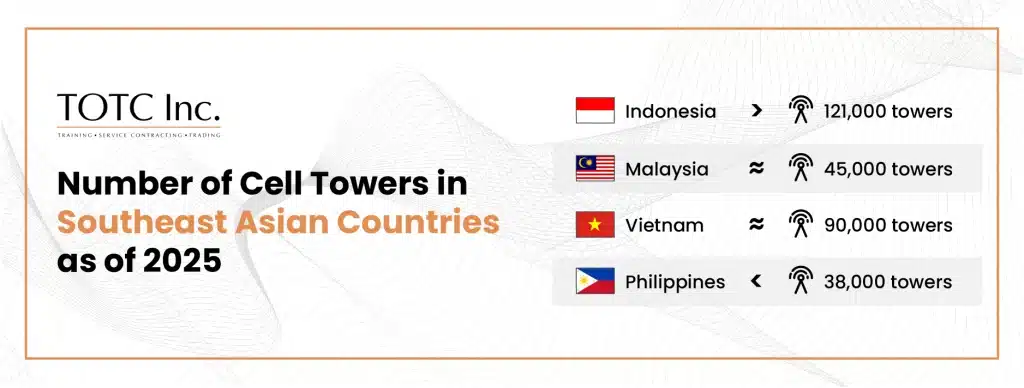
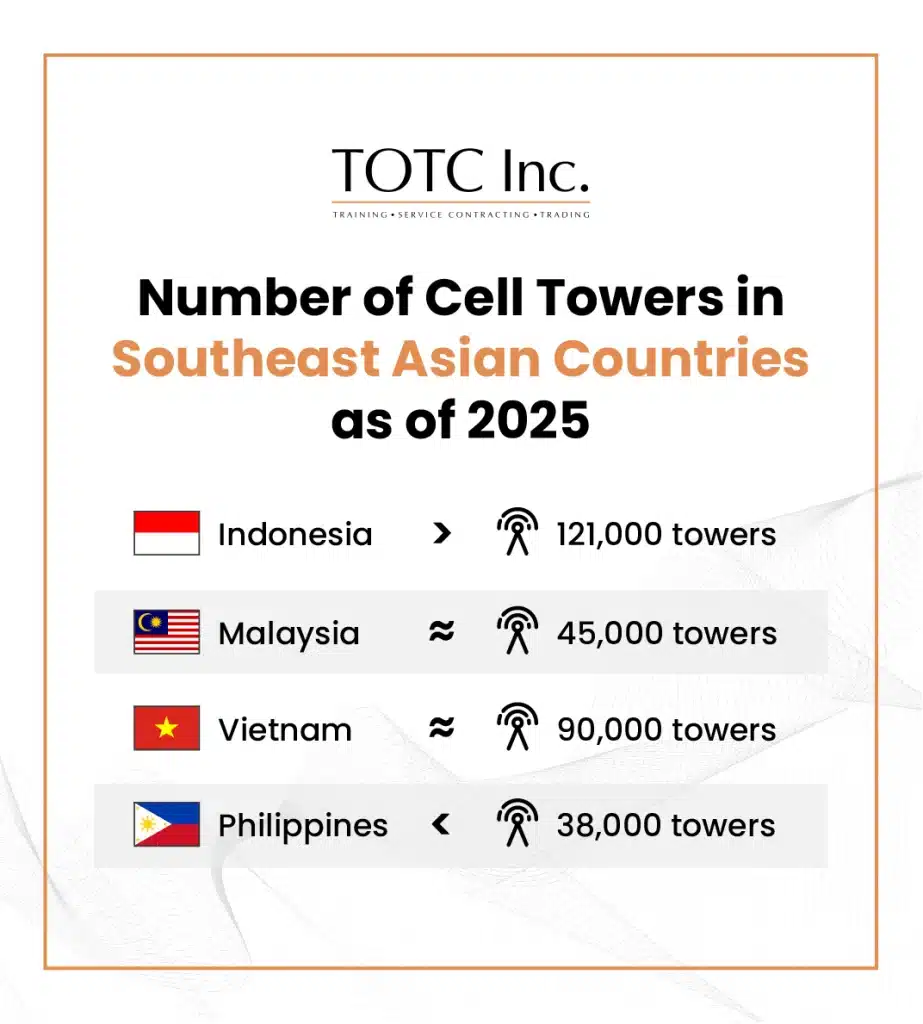
Table of contents:
More Than Just an Issue of Budget and Planning
However, the lack of towers in the telecommunications industry of the Philippines goes beyond just the jarring [issue] of government budget and planning. The shortage of qualified manpower is a second hurdle that the DICT and mobile network operators have to power over.
Manpower shortage in the telecommunications industry raises recruitment, operational, and procurement concerns. It’s an endless cycle of circling around, ‘who are the most qualified batch of workers to take on this job‘, or ‘how do I maximize output per shift‘, and ‘where do we find the right contractors for this project?‘
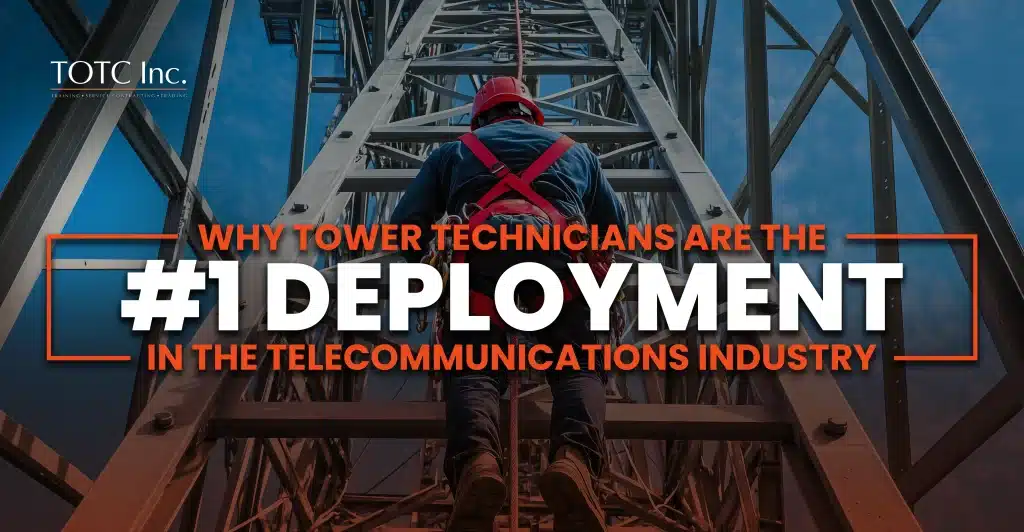
And relative to the height of a telco tower, that’s how much effort goes into the telecommunications projects altogether. Not a lot of technicians, regardless of skill, are cleared to do work at elevated heights. It’s a niche job role. Thus, the demand for tower technicians in the telecommunications industry.
Let’s talk about this more.

What are Telecom Tower Technicians?
A telecom tower technician, used interchangeably with ‘tower climber’, is a skilled worker tasked with installing, maintaining, and repairing communication equipment fixed on high structures. These communication equipment can vary from cables, antennas, tower radios, and more.
Majority of their work is done not just feet but meters above ground that’s why recruiters specifically look out for workers who are physically fit and comfortable working with heights.
Naturally, if someone were to climb over a tall infrastructure, support at the bottom is to be expected so telecom tower technicians often work in a four-person crew. This four-person crew is made up of a climber, a rigger, a supervisor, and the tower technician.
What Makes Telecom Tower Technicians Important?
Telecom tower technicians ensure 24/7 network uptime. They work at odd hours to prevent service interruptions and upgrade existing hardware to improve communications across networks.
Aside from interconnectivity, tower technicians also oversee safety and regulatory compliance. For example, steel antenna towers are subject to the ANSI/TIA-222-G standards.
TODAY TOTC TAUGHT ME: ANSI/TIA-222-G
It is a standard adopted in the Philippines for the structural design, fabrication, and installation of steel antenna towers and supporting structures.
Do Telecom Tower Technicians Require Welding Knowledge?
Telco tower technicians are required to have experience in structural welding since they are expected to cut and repair metal beams, columns, and girders if needed.
To be specific, Shielded Metal Arc Welding (SMAW) and Flux-Cored Arc Welding (FCAW) are the top welding certification requirement among tower workers.
TOTC offers a comprehensive suite of welding training courses.
We offer GMAW, GTAW, FCAW, and SMAW welding classes.
Why Welding Knowledge is Critical to Telecom Tower Management
Welding is critical to the Telecom industry because it is the very essence of how cell towers are built. For example, when these configurations require updating, welding is used to reinforce the towers’ legs and branching to handle increased loads.
Let’s go over its importance in even greater detail:
1. Structural Integrity
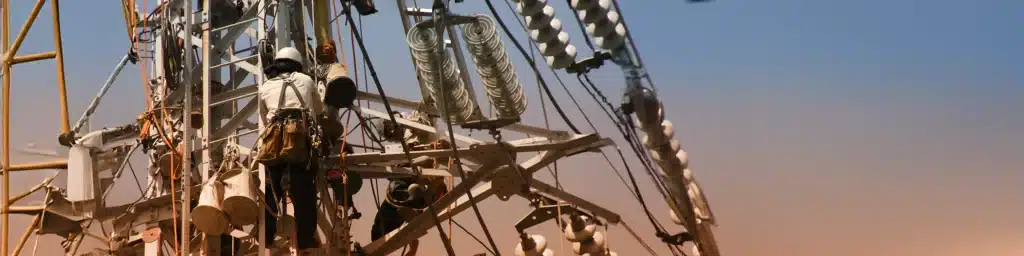
Welding creates strong and permanent (semi) bonds. It is welding that puts its metal parts together and ensures tall infrastructures can stand the harshest environmental conditions. Compared to bolts that go loose over time, welds are stronger and more rigid which makes it perfect, and critical, for high-stress projects like telco tower management.
2. Repair and Maintenance
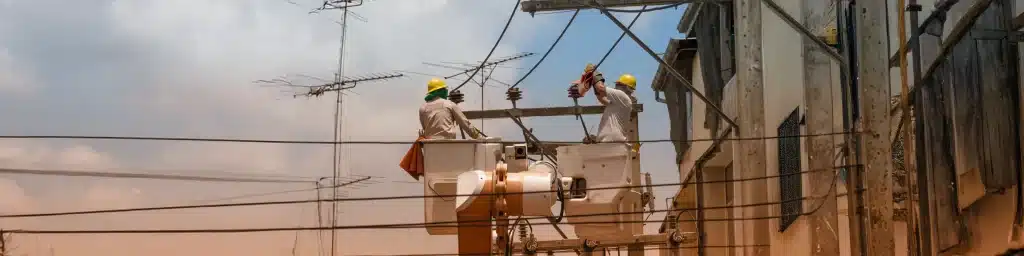
Telco welding is used for onsite repairs. Welds can break unexpectedly due to a variety of factors. First they manifest in cracks, corrosion, and fatigue. This is why tower technicians require knowledge. On the event that they encounter these issues while climbing the towers, they can be the first to respond.

3. Improved Network Reliability
Once necessary repairs and maintenance are done, towers are strengthened and are built to be stable for long periods of time. This helps with preventing signal disruptions, communication outage, and structural hazards specially.
1. Structural Upgrades and Modification
Tower technicians are expected to upgrade cell towers from time to time. Structural upgrades usually involve making upgrades to existing towers to 5G towers, monopole and guyed towers, stealth towers, installing flat plates, etc.
2. Onsite Fabrication
Field welding enables tower technicians to fabricate custom components directly at the installation site. This includes creating mounting brackets, antenna support frames, and cable management systems tailored to specific tower configurations. Onsite fabrication reduces transportation costs, minimizes installation delays, and allows for immediate adjustments to meet unique site requirements. Technicians often need to weld custom solutions when standard prefabricated parts don’t fit existing tower geometry or when modifications are needed to accommodate new equipment layouts.
Top 3 Challenges Facing the Telecom Tower Industry
Any booming industry is plagued with risks. Intense pressure backs it up, key challenges stand in between the contractor and the project deadline. The telecom tower industry is not an exception. Here are the top 3 challenges the telecom tower industry faces:
1. High Capital Expenditures
Telecommunications tower are only as strong as the care put into it. However, some maintenance activities are more expensive than others, and small problems can quickly escalate into cost setbacks.
2. Access and Logistics
Getting personnel and equipment to a tower site at odd hours is one thing, the location of these telecom towers is another. Many towers are built in remote or difficult-to-access areas. Often, they’re found deep in the mountains, dense forests, or even private land where access is limited only to very important people.
3. Manpower Shortage
The local telecom tower industry is not the only one facing manpower shortage. There is a severe global talent shortage driven by an aging workforce coupled by a young generation that lacks experience. A global study estimates that the deficit of skilled workers could exceed 85 million by 2030, leading to $8.5 trillion in unrealized annual revenue. That amounts to 502 trillion in pesos.
Telecom Tower Technicians as the Backbone of the Telecommunications Industry
In this blog, we went over the ‘whats’, the ‘whys’, the ‘dos’, and the ‘challenges’. Now let’s go back to the ‘who.’
Telecom tower technicians are the backbone of the telecommunications industry. They climb up to 500 feet in the air, even in extreme conditions. Imagine, in brutal heat, in freezing cold, in high winds, at night under headlamp—telecom tower technicians do so much to keep the signal alive in the country.
Every time you stream a video, make a video call, or rely on GPS navigation, there’s a tower technician who has ensured that infrastructure is operational and maintained to the highest standards. Their expertise in welding, rigging, climbing, and equipment installation makes modern wireless communication possible.
Now, not having telecom tower technicians around would mean that infrastructures would cease to function properly, service outages would be a normal occurrence, stalled network upgrades would be a trend, and regulatory safety standards would be violated.